Tradition, Taste, and Togetherness
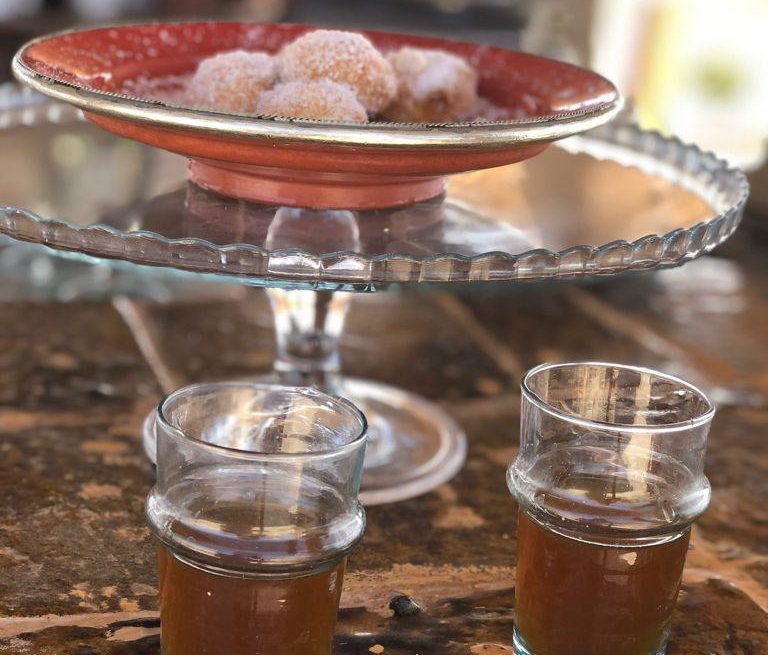
Drinking Moroccan tea is more than just savoring a beverage. It is an immersive sensory journey that captures the essence of Moroccan culture. A humble glass of mint tea, or “atay,” transcends its simple ingredients to become a powerful symbol of tradition, hospitality, and cultural richness. On a hot Moroccan day, this refreshing drink can feel like an energy boost, revitalizing the body and spirit. Renowned for its unique blend of aromatic herbs, Moroccan tea is a cherished as tradition. The beverage not only refreshes but also unites people.
Moroccan Mint Tea: A Brief History
Also known as “atay,” Moroccan mint tea has a history that is deeply interwoven with the country’s cultural heritage. Although tea has been enjoyed around the world for centuries, its introduction to Morocco is relatively recent. The first references to tea in Morocco date back to the 19th century. This time when trade with Europe and Asia began to flourish. British traders, looking to offload surplus green tea, began exporting it to Morocco. This marked the beginning of a Moroccan tea tradition that has since evolved into a unique cultural practice. Over time, Moroccans adapted the tea-drinking custom, infusing it with their own blend of flavors, rituals, and cultural nuances.

The Art of Preparing Moroccan Tea
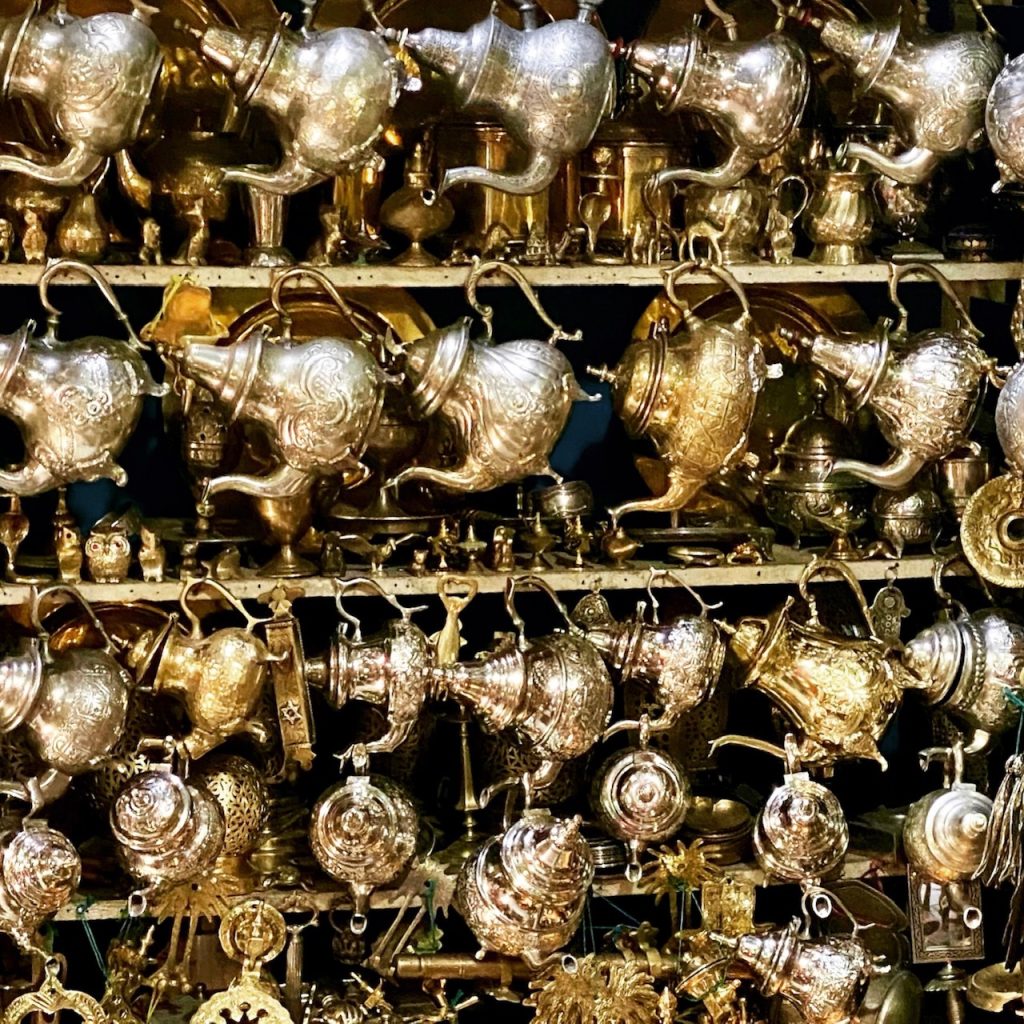
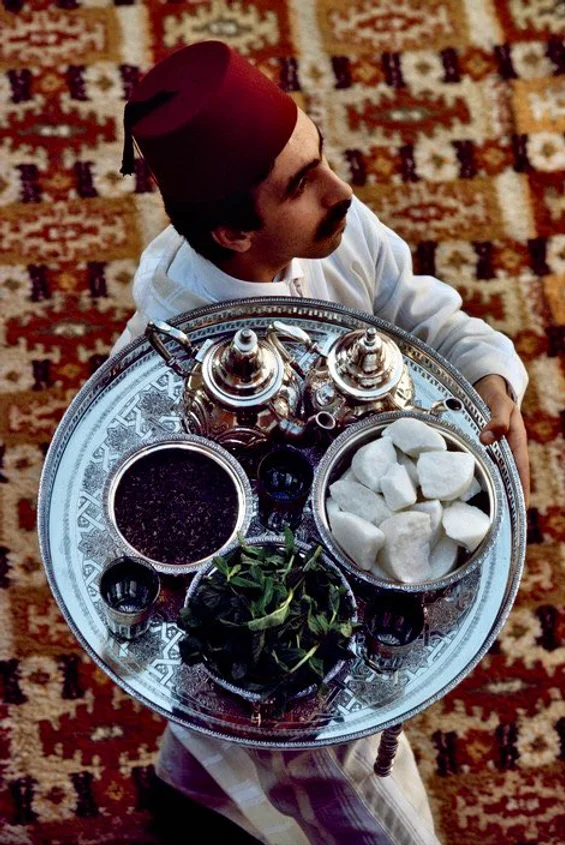
At the heart of a perfect glass of Moroccan mint tea is a harmonious blend of green tea, fresh mint leaves, and plenty of sugar. This combination creates a delightful symphony of sweet and refreshing notes that dance on the palate. The key to a perfect cup of tea lies in its meticulous preparation. A process that is both an art and a ritual.
To prepare Moroccan tea, the process begins by steeping green tea leaves in cold water. Next, bringing them to a gentle simmer on a small gas stove. This method allows the tea leaves to slowly release their flavors, resulting in a rich and aromatic brew. Once the tea has steeped, it is taken off the heat. Afterwards, fresh mint leaves along with a generous amount of sugar are added. This creates the ideal balance of sweetness and freshness that Moroccan tea is known for.
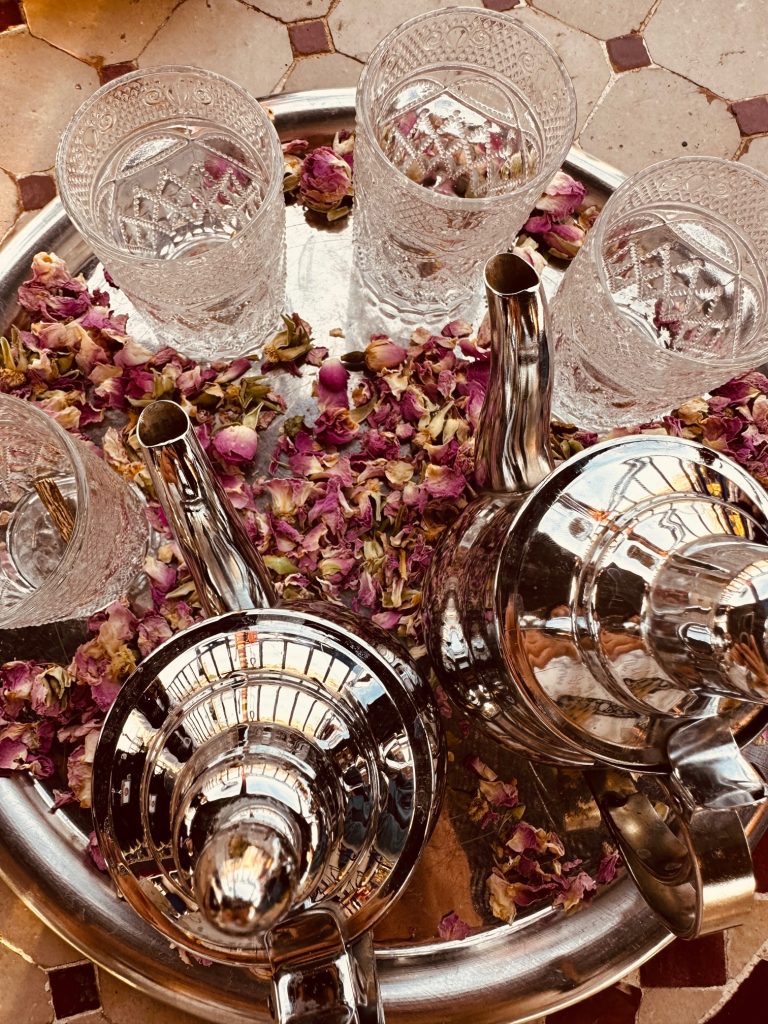
The tea is then mixed by pouring it repeatedly from one glass to another. This technique not only blends the flavors but also cools and aerates the tea. It enhancing its overall taste and making it ready to drink. In the Moroccan desert, the hallmark of a well-prepared atay is a thick layer of foam. It is created by the tiny bubbles of air which form on top when the tea is poured from a height. This foam is a sign of quality, indicating that the tea is ready to be served to guests.
The Ritual and Ceremonial Significance of Moroccan Tea
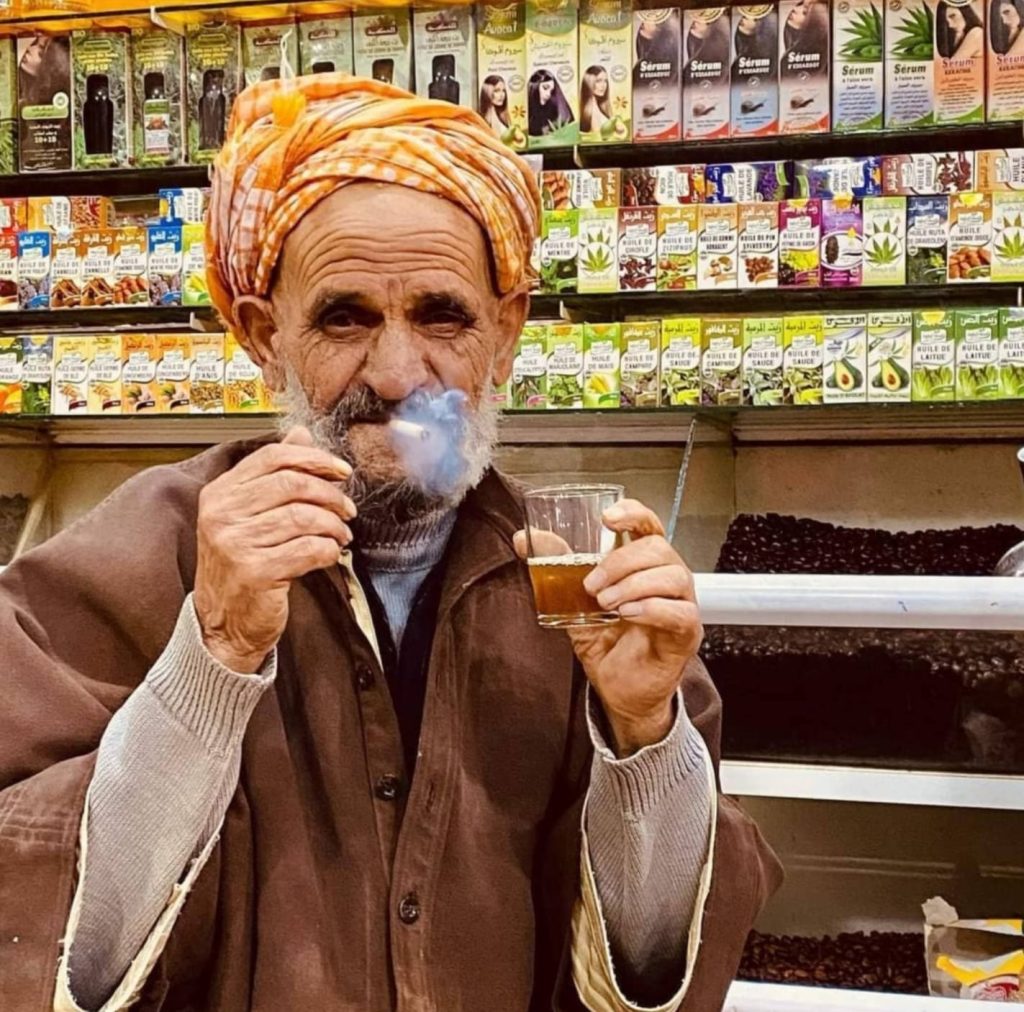
In Morocco, mint tea is much more than just a drink. it is a symbol of hospitality and an integral part of social life. The preparation and serving of tea is a ceremonial act that reflects deep respect for tradition. It is commitment to the values of warmth and generosity. In homes and cafes across the country, serving tea to guests is a gesture. Its about of welcoming and hospitality, an invitation to sit down, relax, and enjoy the company.
This ritual is also an opportunity to strengthen social bonds, foster conversations, and build relationships. The traditional preparation and serving of Moroccan tea hold significant cultural importance, symbolizing friendship, connection, and community. The art of “high pouring,” where the tea is poured from a great height into small glasses. This is not only a display of the host’s skill but also a sign of respect and honor towards their guests.
In essence, Moroccan mint tea is a reflection of the country’s rich cultural history. “Atay” is a drink that brings people together and offers a taste of Moroccan hospitality.